
Foxborough Farm
Foxborough Farm
In Autumn term 2021, one of our long-term dreams was realised when we opened our farm! Our farm is home to two pigmy goats and three chickens.

Our goats were just over one when they joined us so already had names, Donald and Daisy. They are brother and sister. Donald is very cheeky; he sometimes dances and is always looking for treats! Daisy is well behaved in her pen, but if she sees an opportunity to escape and roam the field, she will take it! Donald has brown and black markings; Daisy has black markings.

Our children named our chickens, in class they came up with some options and then ‘clucked’ for their favourite names democratically in assembly! Our grey chicken is called Cookie, the black one is Orio and the brown one is Toffee. Did you know that chickens recognise their own names, along with many other words?
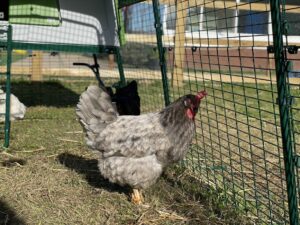
Our farm is a wonderful addition to our fabulous school community. Our children care for them, taking turns to feed, muck out and tend to them. Our older children support our younger children with their jobs and responsibilities. Our farm supports our citizenship and community responsibilities and helps us to work together. We have learnt so much about our animals since they arrived, children and staff!
At lunchtime, there is a club where children can come, and support Mrs. Grieve with some additional tasks around the farm.
We would like to say a huge thank you to the Berkshire Agricultural College who not only built our farm for us, but they also help us to look after our animals.
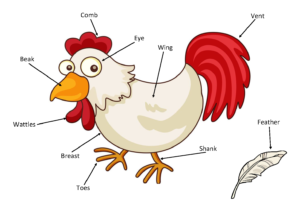
Fun Facts about Chickens
Fun Facts about chickens
-
- A healthy chicken lays about 265 eggs each year. That’s a lot of omeletts!
- Chickens are related to the Tyrannosaurus Rex
- Chickens will be less nervous if you walk backwards when entering the coop.
- Most chickens swallow gravel to help mash food.
- Chickens cluck after they lay an egg.
- As a chicken gets older the eggs they lay become bigger but fewer eggs are laid.
- There are more chickens in the world than any other species of bird.
- Chickens have excellent hearing and memory.
- There are well over 300 breeds of chickens.
Fun Facts about Goats
Goats- Fun Facts
- A baby goat is called a kid, but did you know that a goat giving birth is said to be “kidding”?
- Goats are sociable animals and therefore become depressed if they are separated or isolated from their companions, however they are not flock-orientated like sheep.
- They are one of the cleanliest animals and are much more selective feeders than cows, sheep, pigs, swine and even dogs.
- Goats are very intelligent and curious animals. Their inquisitive nature is exemplified in their constant desire to explore and investigate anything unfamiliar which they come across.
- They communicate with each other by bleating. Mothers will often call to their young (kids) to ensure they stay close-by. Mother and kid goats recognise each other’s call soon after the mothers give birth.
- Goats can be taught their name and to come when called.
- They are very picky eaters. They have very sensitive lips, which they use to “mouth” things in search of clean and tasty food. They will often refuse to eat hay that has been walked on or lying around loose for a day.
- Goats use the sneeze sound as an alarm. They use a sneeze to warn each other of danger, whether real or imagined.
- They are extremely intelligent and curious and are very often not given credit for being the smart and loving creatures they actually are.
- Goats dislike water and would rather leap over streams and puddles than step in them.

Useful Links
Julie Coaker- PA to Headteacher jcoaker@foxboroughprimary.co.uk